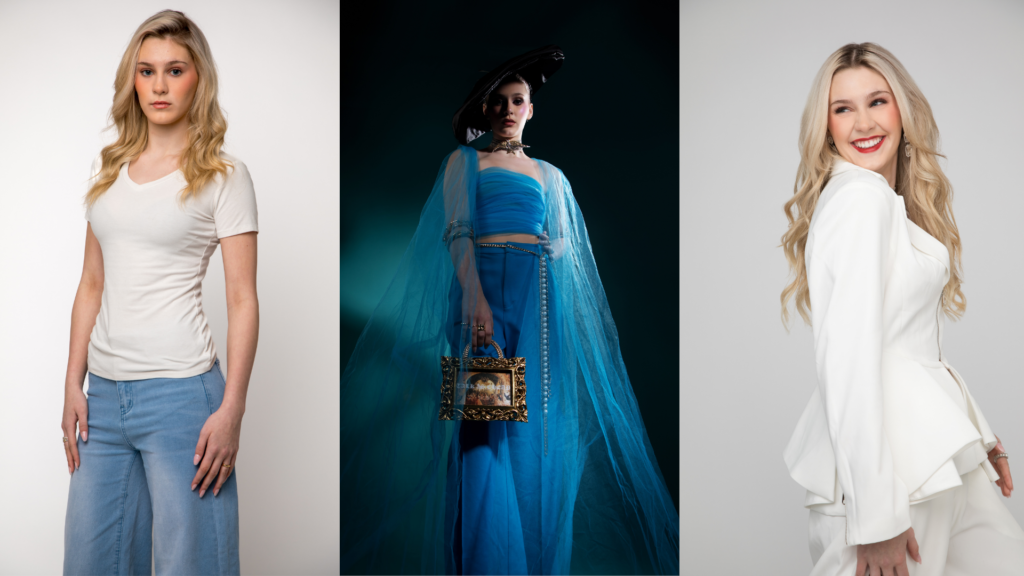
Digitals Vs. Portfolio: What Agencies Want Before Hiring You
“I’ve done some research and realized that agencies only want digitals, so I’m not really looking for a full portfolio yet. Let’s set up my shoot for the end of the month.”
This is a snippet from a conversation I had with an aspiring model a couple of weeks ago. After working in the fashion and modeling industry for over 25 years, collaborating with agencies, working on editorial projects, and photographing models at every stage of their careers, I can tell you that this is one of the most misunderstood ideas circulating among beginners right now. It’s not completely wrong, but it is dangerously incomplete.
Yes, agencies do ask aspiring models for digitals. But that is for a very specific reason, and it has everything to do with efficiency, not comprehensiveness.
Digitals are only the first step, not the whole story. If you’re serious about modeling, understanding why agencies ask for digitals, and what comes after is one of the most important things you learn before your first agency submission.
What Are Digitals for Modeling Agencies?
Digitals, sometimes also called polaroids for models, are simple and natural photographs used for modeling agency submissions. They are meant to be basic, with a simple goal: to show the model as naturally as possible. It’s just how you are, unfiltered.
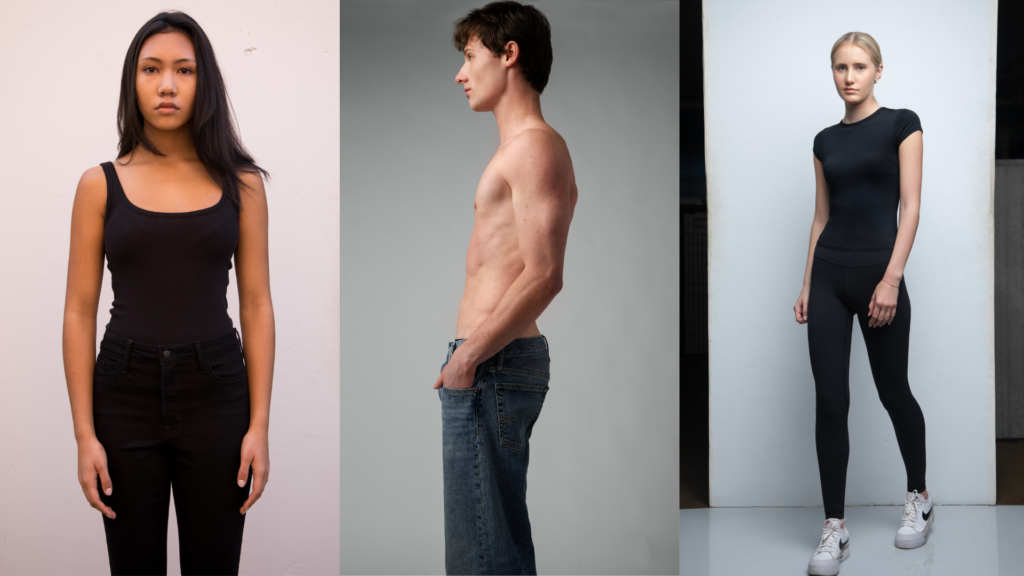
Example of modeling digitals — front (left, Lexi), profile (middle, Michael), and full-length (right, Gabriella) views
A standard set of digitals typically includes a front-facing portrait, a profile shot, a three-quarter turn, and a full-length standing photo. Minimal posing. Neutral lighting. No heavy styling or makeup. No editing/retouching. That’s it.
Agencies use digitals to evaluate your natural face, your proportions, your posture, without the help of a stylist, a beauty team, or a retoucher. They act as a first filter in the submission process, helping agencies answer a very simple question:
Does this person have the raw potential to work as a model?
Why Do Agencies Ask for Digitals First?
When an agency reviews your digitals, they’re evaluating your potential. They want to see the real person who can fit the physical criteria and market potential they look for in new talent. In many ways, digitals are like a screening tool – telling an agency whether it’s worth investing time in you – and not a hiring decision.
Over the years, working around fashion shoots, editorial work, and agency submissions, I’ve seen how quickly agencies can evaluate digitals. They’re looking for answers to: Does this person have the height and proportions we work with? Is the bone structure camera-friendly? Is the face photogenic in its natural state? Is there a presence, even in a casual photo taken against a plain wall?
The important distinction here is that digitals show potential, not whether someone can actually do the job. This difference is where many aspiring models get confused.
What Digitals Cannot Show — And Why That Matters
If there is one thing the industry has always known, it’s this: the camera doesn’t lie, but it also doesn’t tell the whole truth from a single frame.
Digitals show your natural appearance, not your versatility or range of expression. They cannot show how you adapt to different styling directions, how you take direction from a photographer or creative director, or how confidently you move in front of a lens.
And modeling, whether it’s fashion, editorial, beauty, or commercial, is much more than just standing still in neutral lighting. It’s the ability to bring out different moods, aesthetics, and characters, depending on what a campaign or editorial requires.
And digitals simply cannot communicate these qualities. This is exactly why digitals are like an introduction to the book. A modeling portfolio is where the real story begins.
Why Do Models Still Need a Full Modeling Portfolio?
Once an agency sees potential in your digitals, the next immediate question becomes: What can this model actually do?
This is where a professional modeling portfolio becomes important.
A strong, well-structured model portfolio shows a potential model in action – styled, directed, and captured across multiple looks that reflect different facets of who they are as a model. It shows range and adaptability. It tells a casting director, at a glance, what categories this person fits into and what kinds of bookings they’re likely to succeed in.
When an agency likes your digitals and invites you in for a model call, which is part interview, part personality assessment, part in-person evaluation, they will ask to see your portfolio at that stage. If you don’t have one, you don’t get rejected outright. But you do get placed on the back row: flagged as an underdeveloped talent, asked to build your book before they can do anything with you.
That process typically involves test shoots – arrangements where a photographer uses you for their own creative projects in exchange for images. You gain experience, you improve your posing, and you learn how different photographers work.
But here’s what most beginners don’t realize: those images are built for the photographer’s portfolio, not yours. They’re not designed around your strengths, your market category, or what an agency booker needs to see to place you in a paid role. You can spend years in that cycle, shooting frequently, improving steadily, and still not have a book that gets you actual work.
A professionally directed portfolio shoot, built around your specific modeling strengths and the market you’re targeting, cuts through all of that. It’s not just better images. It’s the difference between years of guesswork and a focused starting point that agencies can actually act on.
In the modeling world, clients aren’t just booking a face; they’re booking someone who can bring a concept to life. Think of it this way: digitals get you through the front door. Your portfolio is what happens once you’re inside the room – it helps casting directors imagine where you’d best fit in.
What a Beginner Modeling Portfolio Should Include
A beginner modeling portfolio should show several different looks that reflect potential industry work.
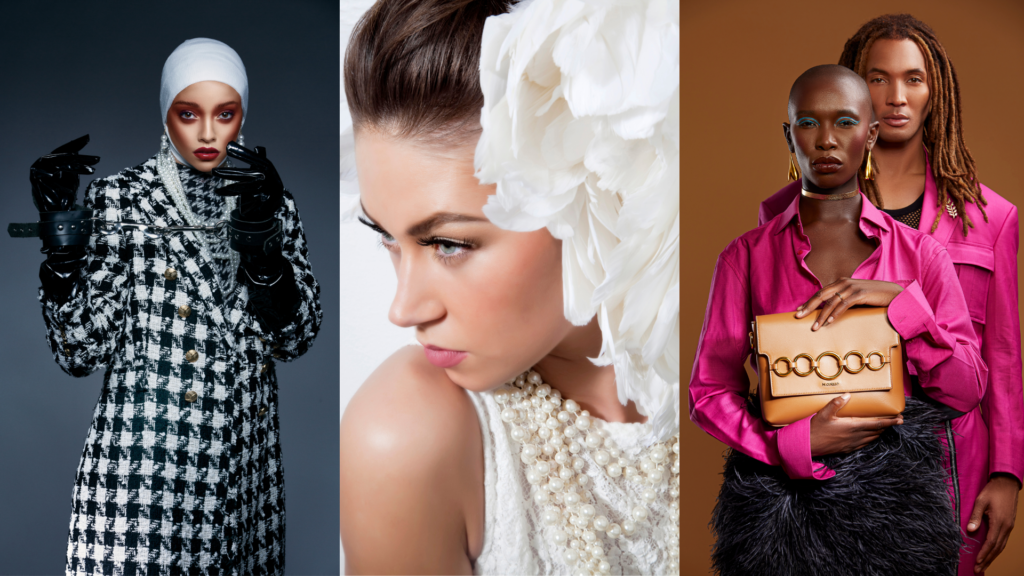
Example of Beginner Portfolio shots — Fashion (left), Beauty (middle), and Commercial (right)
This is where a structured strategy starts to matter; this isn’t just a collection of pretty photos, rather, it’s a curated argument for your marketability. Here’s what you typically need for the most common modeling categories:
1. Fashion Modeling Portfolio
A portfolio in this space often includes:
- Editorial fashion looks
- Athleisure or activewear styling
- Swimwear or body-focused shots
- Casual lifestyle or street-style looks
The goal is to show how naturally the model carries different fashion directions and how they might appear in fashion campaigns, magazines, or runway promotions.
- Beauty & Face Modeling Portfolio
For models whose strongest asset is their face, the portfolio leans into:
- Close-up skincare beauty shots
- Hair beauty shots
- Editorial beauty portraits
These images highlight facial features, skin quality, and expression control, and it is where subtle shifts in mood become critical to show.
- Commercial & Lifestyle Portfolio
Commercial modeling is about relatability and personality, which is the ability to look like a real person in a real moment. Portfolios here often include:
- Everyday lifestyle scenes
- Casual fashion
- Brand-friendly imagery that feels warm & authentic
These types of modeling portfolio photos help show how a model might appear in advertising campaigns, social media promotions, or product marketing.
The specific looks in your portfolio should be chosen with intention, not simply assembled from whatever photos you happen to have on hand. A portfolio should play to the model’s strengths, not try to imitate every possible modeling style.
The Most Common Mistake Beginners Make
In my 25+ years of experience, I’ve seen this so many times: a model submits their digitals to an agency, then gets a request for more looks/materials, and then scrambles – because digitals are all they have.
Or worse, they present a portfolio that’s inconsistent, unfocused, or full of looks that don’t reflect any clear market category. The agency can’t picture where this person fits, and the opportunity slips away.
The expression “first impressions matter” fits perfectly here; the misconception that digitals are the portfolio makes models unprepared at the exact moment they need to be ready. It’s the equivalent of arriving at a crucial job interview without a résumé, having filled only the application form. Technically, it’s a step in the process, but it is not enough to get the offer.
A strong beginner modeling portfolio tells agencies three things immediately:
- This model has natural potential
- This model understands their category
- This model can deliver different looks in front of the camera
This combination is what agencies and casting directors are ultimately looking for. Without that third signal, the first two rarely go anywhere.
Three Things to Do Before Your First Portfolio Shoot
If you’re planning to build your first professional modeling portfolio, here is where I would recommend starting:
- Understand Your Modeling Category
Not every model fits every market, and that’s fine. I advise every beginner model who walks through my door that if they ever want to be successful in this industry, the very first thing they must do is discover where their strengths lie and determine which modeling category they best fit into. If you’re at the same stage, spend time honestly assessing whether you’re more suited to fashion, commercial, beauty, or lifestyle work, and build your portfolio to reflect that honestly.
- Plan Your Looks Strategically
The next step is crucial – yet often overlooked. Don’t try to cover every aesthetic, and resist the urge to throw random outfits together. A focused portfolio with five to seven strong, intentional looks will outperform a chaotic collection of twenty. Think about the range you’re showing: different moods, different styling levels, different expressions.
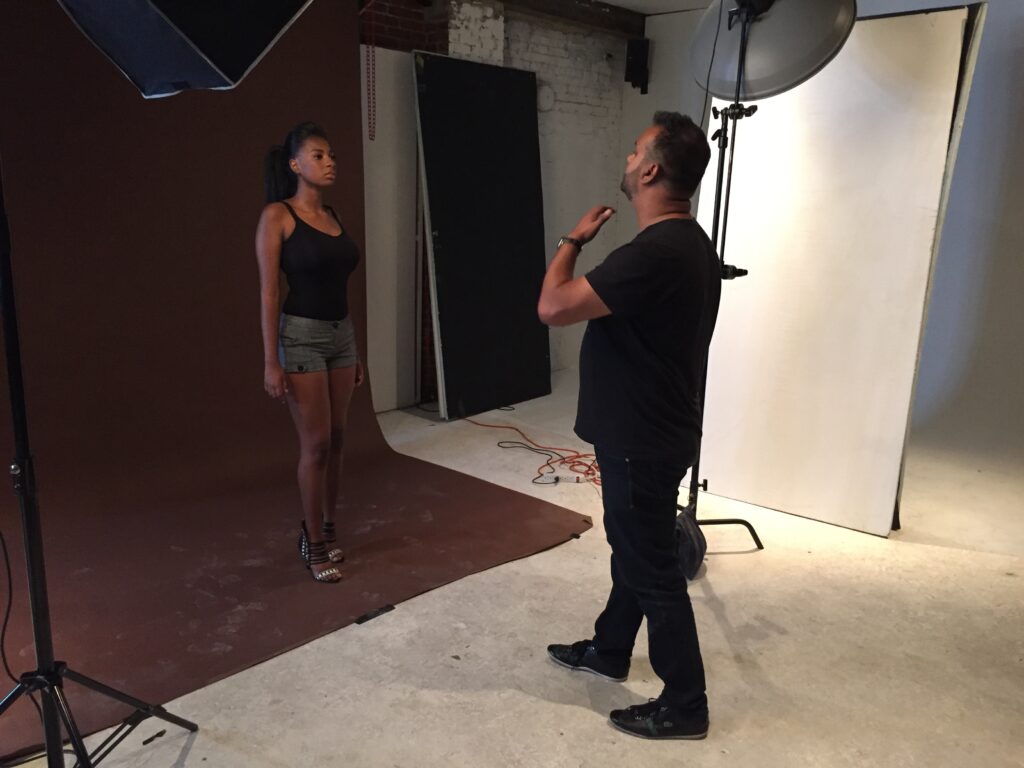
Expert fashion photographer Vikrant Tunious directing a model during her portfolio shoot
- Work with Someone Who Understands the Industry
Building a professional modeling portfolio isn’t just about taking good photos. It’s about creating images that speak the language agencies and casting directors use; images that communicate all the right things about who you are as a model. This requires working with a photographer who specializes in modeling portfolio development; one who understands what agencies actually look for, not just someone who can point a camera somewhere and shoot.
Working with a Professional Model Portfolio Photographer
Many aspiring models in cities like New York, Miami, Los Angeles, and Philadelphia have discovered that working with a professional photographer with deep experience in fashion photography and agency submissions makes a huge difference in how their portfolios are received.
Experience in editorial work, fashion campaigns, and portfolio development enables a photographer to guide model positioning, look selection, and styling choices that align with real industry expectations. This is especially important for aspiring models who are still learning how to translate their potential into portfolio looks that agencies can use.
Start Right – Your Portfolio is Your Career
If you’re starting your modeling journey, the best advice I can offer you is to take your time to understand what agencies are truly looking for, and not just what they ask for upfront.
Digitals are important because they show your natural potential. They are a necessary first step and a useful screening tool. But they are not your modeling portfolio, and they are not a substitute for one.
A strong model portfolio that’s built with intention, guided by industry knowledge, and executed with a clear understanding of your modeling category is what separates models who get callbacks from those who get silence. It demonstrates how you bring different looks, expressions, and concepts to life. It also helps agencies and clients see where you fit in the industry.
Your career is worth building on the right foundation.
Frequently Asked Questions
- What is a fashion model portfolio?
A model portfolio is an intentional, curated collection of 20-25 professional photos that showcase a model’s range, posing skills, versatility, and appearance. It serves as a visual résumé or book, allowing agencies to assess a model’s abilities and helping secure agency representation.
2. Do models need a professional portfolio?
While digitals are usually the first step in agency submissions, a professional modeling portfolio showcases versatility, range, and camera presence – more than what digitals can communicate. Most agencies expect to see a professional model portfolio before making representation decisions.
3. How many photos should be in a beginner modeling portfolio?
A strong beginner modeling portfolio should contain between 20 and 25 images, showing a range of looks, expressions, and posing skills. Quality and intentionality of the photos matter because a focused portfolio with strong images will outperform a scattered image collection.
4. Do modeling agencies require professional photos?
Typically, agencies start the evaluation process with digitals, but a well-structured portfolio with professionally shot images can significantly strengthen your submission and demonstrate that you’re a serious, prepared candidate.
5. What’s the difference between modeling digitals and a modeling portfolio?
Digitals are natural, unstyled reference photos that show an agency what you look like without editing or styling. A modeling portfolio is a curated collection of professional images that show your range, versatility, and ability to execute different looks; it’s the proof of your ability, not just your appearance.
6. What should be included in a model portfolio?
A strong portfolio typically includes a mix of editorial, lifestyle, fashion, and beauty looks that demonstrate versatility, personality, and confidence in front of the camera.
Vikrant Tunious is a fashion and portrait photographer based in Fishtown, Philadelphia, with over 25 years of experience working across editorial, commercial, and model portfolio photography.