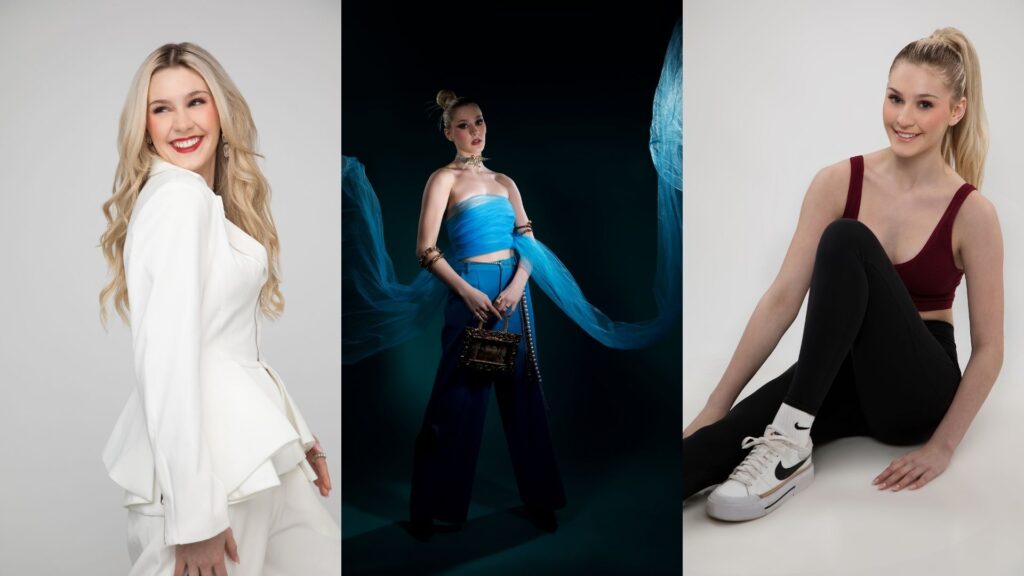
Some looks from Miranda’s Teen Model Portfolio done by Vikrant Photography
A competitive volleyball player. Tall and athletic. Long lines, strong proportions. Built for fashion modeling. These are just some of the attributes that describe Miranda Zima, who recently approached me for her teen modeling portfolio.
Miranda is an aspiring teen model, 5 feet 9 inches tall, with a US size 0–2. She landed on Vikrant Photography after a fair bit of research on one of the best teen model photographers in the Philadelphia area. Her mother is her biggest supporter; she was there every step of the way to make sure her daughter was set up for success.
Since Miranda’s mom was a model herself when she was young, she knew about the ins and outs of the modeling world. She knew that Miranda would need a professional teen modeling portfolio to get started; during the consultation, she was keen to know which modeling category Miranda would best fit in besides runway and fashion. She was also eager to learn the aspects on which Miranda could be marketable.
After 25+ years of developing fashion portfolios for models at every stage of their careers, one thing has become clear: a great portfolio isn’t built by accident. It’s built by design.
In Miranda’s case, her biggest advantage as a competitive volleyball player and her proportions translated effortlessly across multiple modeling categories. As I sat with my team to map out her modeling image strategy, I realized the decisions we were making, and the reason why we chose certain looks over others for her teen model portfolio, were exactly the kind of things that would help position her better in the market. Most aspiring models don’t get to see or work with that level of strategic intent, so I wanted to create a step-by-step process guide that explains the what, how, and why behind building a strong teen modeling portfolio.
Defining Miranda’s Teen Modeling Direction
As mentioned before, Miranda has a tall, athletic body with long lines and proportions. She’s a competitive volleyball player, which, in her case, is a huge advantage. This is because being in sports already prepared her for the dedication and resilience required to handle demanding hours, rejection, and the gruelling nature of physical casting calls in the modeling industry.
When I sat down to build her shoot’s moodboard concept, the very first step I took was to define which modeling categories she’d fit best. Based on her physical attributes and interests, Miranda is perfect for fashion, beauty, athletic editorial, and swimwear modeling.
Since Miranda is a teen model, this portfolio required a level of nuance, understanding, and direction that isn’t akin to an adult model’s portfolio. A beginner teen model portfolio requires simplicity, age-appropriate styling, and an intentional strategy to make it stand out from the rest. Naturally, I required my team’s assistance and input here to get the best teen modeling images to make her portfolio truly agency-ready.
With my team of experts – Markie B., the make-up artist, Toni A., the hairstylist, and Soku M., the wardrobe stylist – we created a visual brief of six distinct looks for her model portfolio shoot. Each one was designed with a specific purpose in mind – to showcase a different facet of her marketability, to speak to a different type of client or agency, and together, to tell her complete story as a model.
Here’s what that looks like in practice.
- High-Fashion Studio: The Agency Litmus Test
The first look in almost any serious fashion portfolio should be clean, minimal, and uncompromising; no distractions, just the model, the camera, and the bone structure.
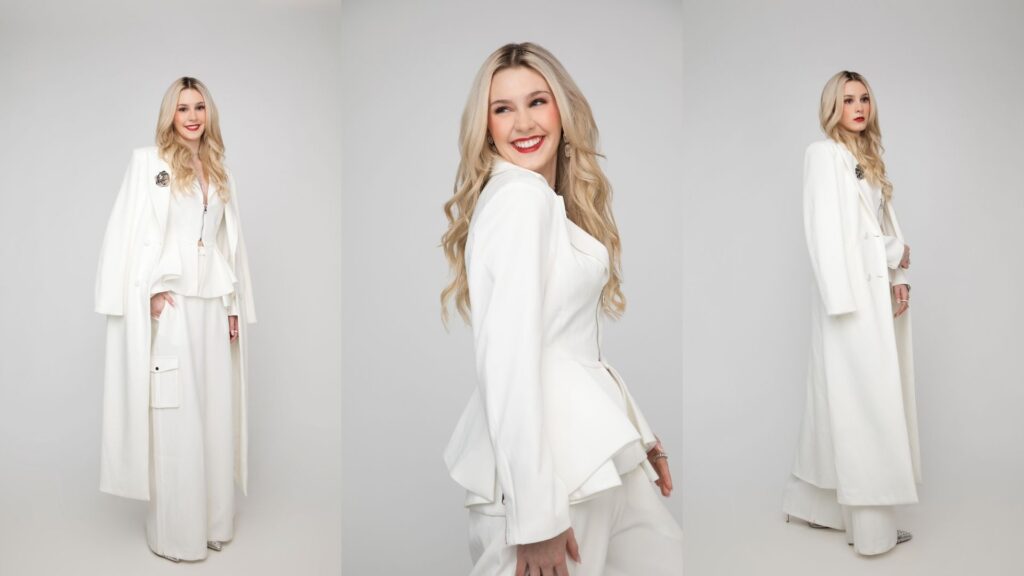
High-fashion studio looks from Miranda’s Teen Model Portfolio
For Miranda, who is 5 feet 9 inches, US 0–2, with long lines and strong proportions, the goal of this look was to communicate a luxury presence. Soku suggested a black bodysuit or structured blazer worn open, straight-leg trousers, or a clean skirt. Toni recommended doing Miranda’s hair in a sleek middle part or low bun, while Markie suggested doing a soft contour, defined brows, and nothing that competes with the face.
What this look does: The poses should work with Miranda’s body’s geometry – strong asymmetry, negative space, and stillness that reads as confidence, rather than stiffness. This is the look that agencies visualize first when they imagine a model for a high-end client. It answers the question every agent asks: Does this person have the raw presence the industry requires?
2. Athletic Editorial: The Niche Differentiator
Most models either ignore this category entirely or approach it like fitness content. Both are mistakes.
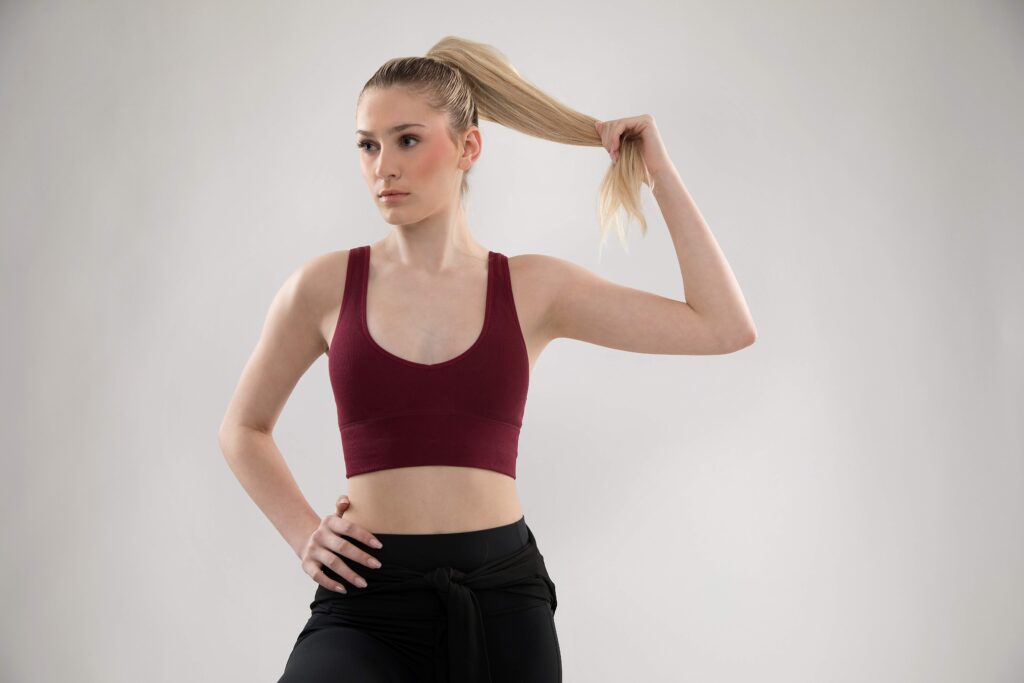
Athletic Editorial look from Miranda’s Teen Model Portfolio
Miranda is a competitive volleyball player, which is a huge differentiator for her. The athletic category in modeling has grown significantly, driven by the rise of performance and lifestyle brands that need models who don’t just look athletic, but move that way authentically.
In Miranda’s case, her athletic background wasn’t just included; it became a strategic pillar in our positioning of her for multi-market representation. We planned an athletic editorial look for her, with a fitted monochrome set, high pony, and directional lighting, which was to be done at a fashion level rather than a sports catalog level.
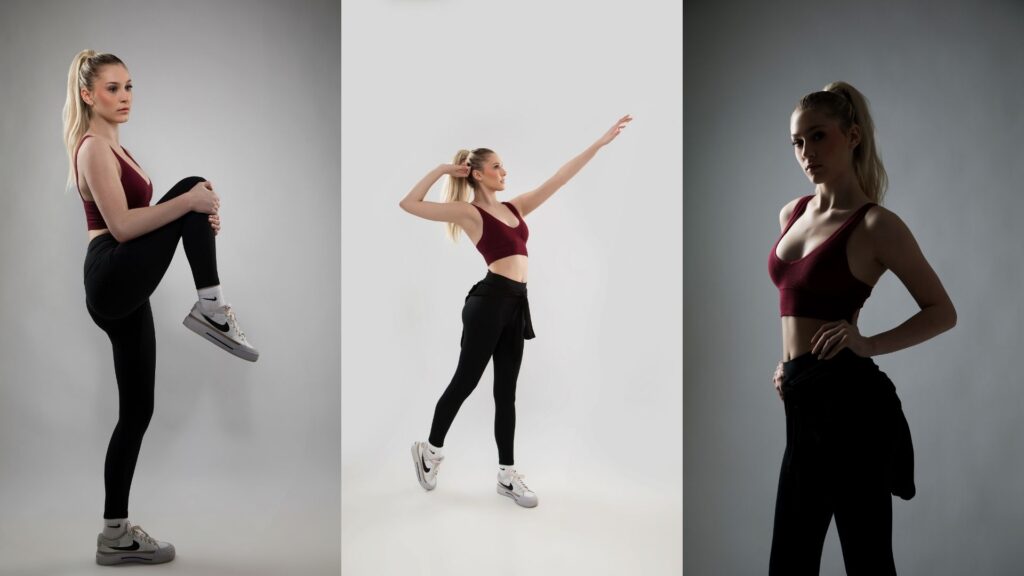
More Athletic Editorial looks from Miranda’s Teen Model Portfolio
What this look does: This look opens doors to an entirely separate category of bookings, similar to Nike’s editorials, Sports Illustrated lifestyle, and activewear campaigns for brands that want strength and movement, not just posed fitness.
The shots here aren’t static. We had jumps, lunges, and strong stances. Motion blur was used deliberately, with dramatic shadows that sculpt rather than flatten. The goal is to look like a model who happens to be an athlete, not an athlete who happens to be in front of a camera.
3. Commercial Lifestyle: The Bookable Middle
Most models underestimate commercial work over fashion editorials. While fashion work will definitely grab eyeballs, commercial work is more reliable and will pay consistently. And a strong beginner model portfolio needs both.
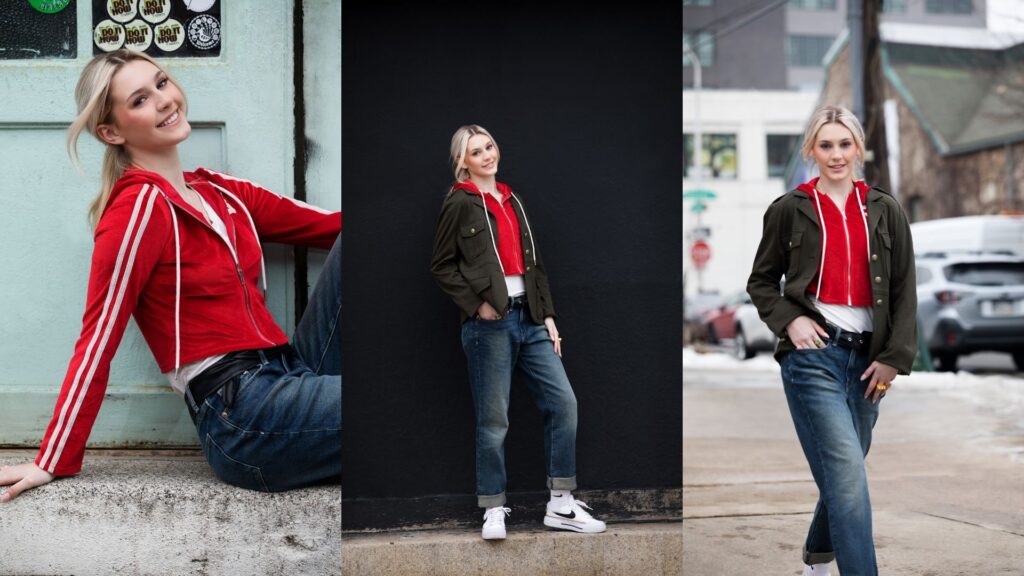
Commercial Lifestyle looks from Miranda’s Teen Model Portfolio
Making Miranda look intentionally approachable, here’s how the commercial lifestyle look turns out for her: a white tee or tank, denim or neutral trousers, paired with clean sneakers. Toni recommended her hair be in soft waves or a loose pony; Markie suggested minimal makeup to go with this look.
Here, the poses aren’t about power or drama; they’re about warmth. What works here is walking, laughing, looking away from the camera with the kind of ease that reads as genuinely human, rather than performed.
What this look does: This look speaks to the broadest category of brand clients – the ones booking models for lifestyle campaigns, product imagery, and everything from fintech apps to food brands. It says: I am relatable. I can sell something without the image feeling like an ad. For models targeting commercial agencies or multi-market representation, this look is what often generates the most consistent work.
4. Swim and Body Confidence
For models with the proportions to support it, a swimwear or lingerie look in a portfolio serves a very specific purpose: it shows agencies the full picture.
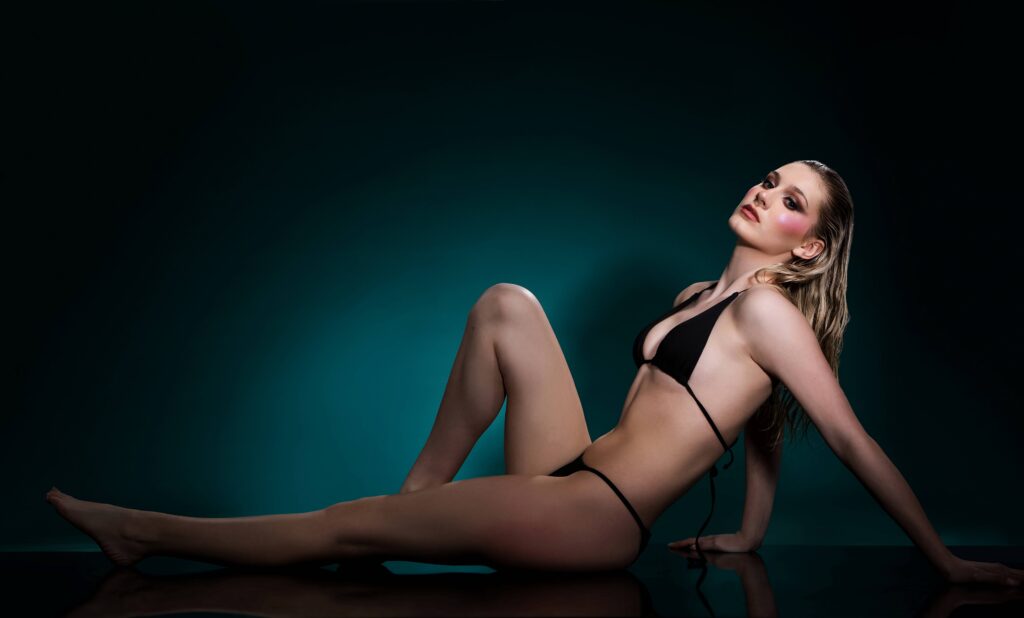
Swimwear look from Miranda’s Teen Model Portfolio
Agencies book models for swim campaigns, resort wear, and body-focused editorial. If a model never includes this category in her portfolio, she’s invisible to those clients by default. But the distinction between doing this well and doing it poorly is significant.
Editorial swim is not the same as social media content. For Miranda, a clean one-piece or minimalist bikini in a neutral tone like black, ivory, or olive, shot with sculptural side lighting, with poses that emphasize her long lines and proportion rather than provocation. For this look, Miranda’s expressions needed to be calm and controlled, as the lighting shows form without the image feeling gratuitous.
What this look does: This look positions Miranda for international boards, Miami market representation, and editorial clients who need someone who can deliver both fashion and swimwear without a separate shoot.
5. Fashion Movement: The Separator
If four of your six looks are static, you’re showing agencies half of what they need to see.
To create a strong impression, I included the fashion movement look for Miranda, with my team suggesting we use a flowing dress, an oversized shirt, and wide trousers made from fabric that responds to the body’s momentum. They also recommended loose hair so that the fabric does what it does when someone moves through it with confidence.
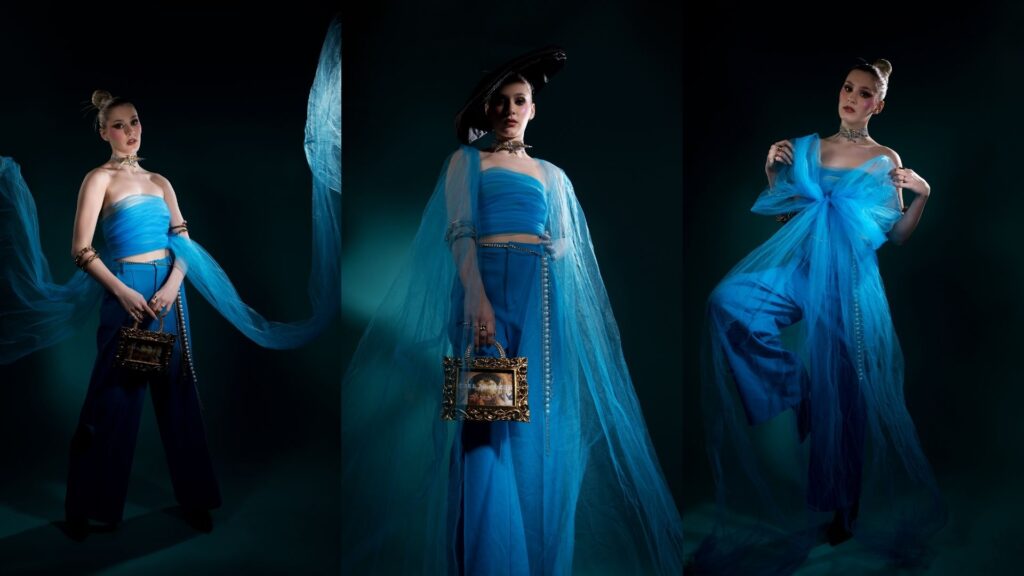
Fashion Movement looks from Miranda’s Teen Model Portfolio
What this look does: This look shows something that posed photography fundamentally cannot: how a model performs in real time. It separates models with presence from models that have poses. A spin, a step, a mid-turn captured at the right moment tells a creative director that this person can work on a live set, respond to direction, and produce usable images in motion.
This is the look built for double-page spreads, for campaign imagery that needs energy, for the editorial market that values dynamism over stillness. It’s also one of the most challenging looks to execute well, which is exactly why including it in a portfolio makes such a strong impression.
6. Elevated Beauty Portrait
The final look in Miranda’s agency submission portfolio should prove something specific: that her face can carry an image entirely on its own.
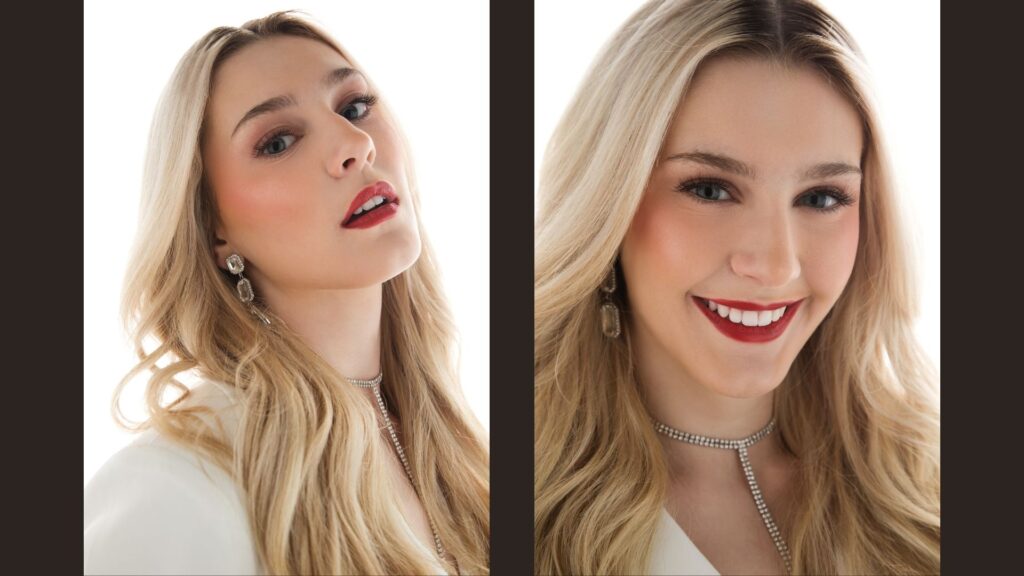
Elevated Beauty looks from Miranda’s Teen Model Portfolio
Soku suggested that the best way to achieve this is with strapless or bare shoulder outfits, but nothing that competes with the neckline, because then the focus is entirely on eyes, cheekbones, and jawline, with expressions ranging from neutral stillness to soft intensity. This then needs to be cropped tight, head and shoulders, then tighter still into pure beauty frames.
What this look does: This look serves multiple practical purposes. It feeds the beauty market: skincare, hair, cosmetics, fragrance, and provides the close-up imagery that agencies use for comp cards. And it forces the model and the photographer to work with just the face, which is one of the most revealing tests of whether the camera genuinely loves a person.
For a model like Miranda with strong facial structure and good skin, this look was the most powerful image in the entire portfolio. For agencies reviewing talent for international markets, beauty portraits are the first thing they look at.
Why Correct Positioning Matters in Modeling
Most aspiring models, especially teen models and their parents, approach their beginner teen model portfolio the wrong way. They think a teen model portfolio shoot is all about showing up, looking good, and getting beautiful photos, instead of building a body of work that communicates something specific to agencies.
And while this is just a part of the whole process, agencies and casting directors who see thousands of portfolios every year can immediately differentiate between a planned shoot and one that wasn’t.
In my 25+ years of experience working with top agencies and talking to casting directors, a well-planned portfolio stands out immediately because it tells a story. It shows an agency not just what a model looks like, but also what category they fit into, what range they have, and what kind of bookings they’re likely to succeed in. A poorly planned portfolio, even if the individual photos are technically beautiful, more often than not, fails to communicate any of that.
The difference? Strategy. Building with intention.
Final Portfolio Outcome
What turns six individual looks into a cohesive teen model portfolio for Miranda is a deliberate color and aesthetic discipline applied across every frame. This is where most teen model portfolios fall apart – too many looks, too many colors, too many ideas, and no cohesion.
In this case, black, white, ivory, beige, muted earth tones, with no loud prints, no logos, no neon – nothing that distracts from the subject, worked wonders in creating an agency-ready teen portfolio.
The palette used here wasn’t arbitrary; it’s the visual language that New York and international agencies and casting directors respond to. It keeps the portfolio feeling cohesive even when the looks shift dramatically in energy and styling. And it keeps Miranda, her proportions, her expressions, and her range, as the constant subject rather than the clothing.
The final deliverable goal for a portfolio like this is typically 25–30 strong selects: a mix of full body, three-quarter, and tight beauty crops in both horizontal and vertical formats, ready for agency submissions and brand use alike.
What New Teen Models can learn from this Shoot
The six-look framework described here isn’t a formula; it’s a way of thinking. Every model’s portfolio strategy should be different because each model’s strengths, proportions, market category, and target agencies are different.
What should be the same is the approach: understanding the model and their goals/interests before shooting, and doing everything with intention. Knowing why each look exists before choosing the wardrobe, and planning the range that needs to be demonstrated, rather than assembling whatever looks visually appealing on the day.
A beginner teen model portfolio that’s built this way, strategically, with each image earning its place, communicates something to agencies that no amount of beautiful but random photography can: that this model, and the people around them, understand the industry.
That understanding is what gets you in the room.
Working with an Expert Teen Modeling Portfolio Photographer
Aspiring teen models and their families in cities like New York, Los Angeles, Miami, and Philadelphia increasingly look for photographers who bring genuine editorial and fashion experience to portfolio development, working knowledge of what different agency types need to see, and how to build a shoot strategy around a specific model’s strengths.
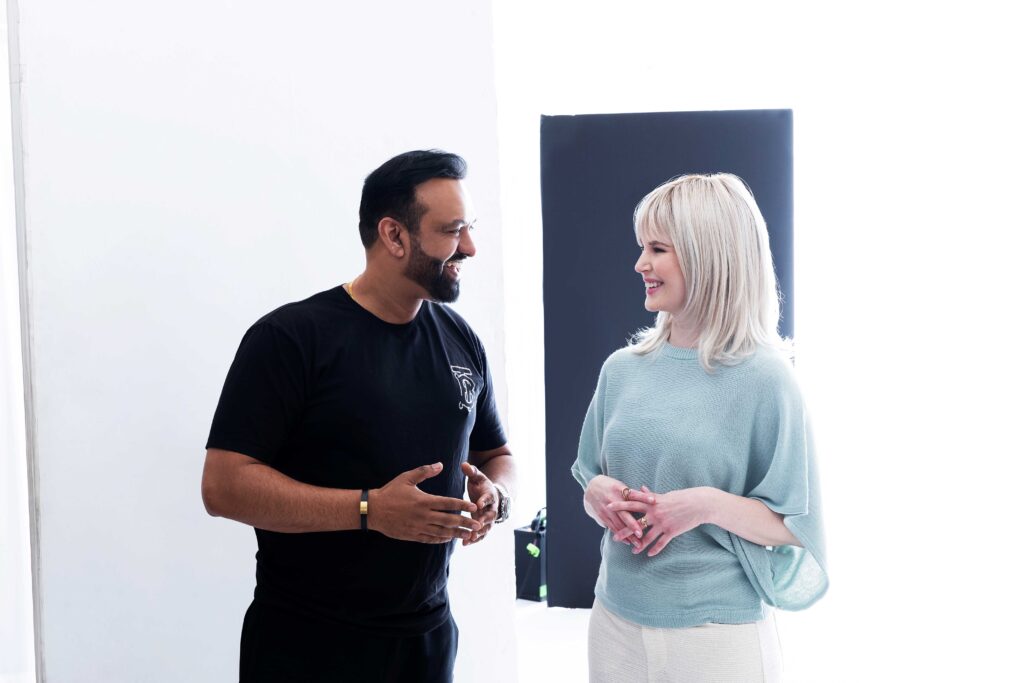
Vikrant guides an aspiring model on her next steps
The difference between a portfolio built by someone with deep industry experience and one built without it is usually visible in the first few frames. If there’s one thing I’ve learned after decades in this industry, it’s this: agencies don’t respond to effort – they respond to clarity.
If you’re serious about modeling, the smartest step you can take isn’t booking a shoot; it’s building the right strategy before the shoot ever happens.
If you’d like help mapping out your own teen modeling portfolio with this level of strategy and intention, you can book your consultation here.
Frequently Asked Questions
- How many looks should a beginner teen model’s portfolio include?
Most strong beginner portfolios include between four and eight distinct looks, depending on the model’s category and target market. The emphasis should always be on intentional range rather than volume – six well-planned looks will consistently outperform twelve inconsistent ones.
- What kind of portfolio do agencies want for teens?
When scouting teen models, agencies mainly look for a clean, clear, and naturally styled portfolio that focuses on their features, authenticity, and range. The main aim is to show that a teen model has potential, is versatile, and is a blank canvas that agencies can adapt for their brands.
- How do I know which modeling category is right for me?
Depending on your physical characteristics (such as overall looks, height, body type, etc.), strengths, and personal interests, you can find the right modeling category for yourself. Whether it’s runway, editorial/print, beauty, athletic, lifestyle, or commercial modeling, you can always figure out the right category that aligns with your physical attributes and interests. This is one of the most important questions in portfolio curation, and something that I always help my models figure out as a professional teen modeling portfolio photographer.
- How do I choose the right teen portfolio photographer?
When looking for a teen portfolio photographer, you need to look for someone with expertise in child & teen modeling photography, their team’s expertise in handling aspiring teen models, proven ability to make their subjects feel at ease working with them, and one that matches your vision and modeling goals.
- What should a teen model photo session include?
A teen model test shoot or model portfolio shoot should include wardrobe styling, hair & make-up, a fully-guided, posing-direction-included photoshoot with an expert model portfolio photographer, and a post-shoot reveal/viewing session.
Vikrant Tunious is a fashion and portrait photographer based in Fishtown, Philadelphia, with over 25 years of experience working across editorial, commercial, and model portfolio photography.